Privacy First
Uploaded files are automatically and permanently deleted within two hours.
Automatic deletion

Convert styled anime and fansub subtitles from Advanced SubStation Alpha into plain SRT files that every player, TV and upload form accepts
You can upload up to 20 subtitles simultaneously.
ASS files describe styles, fonts, colours, positions and effects for each line. SRT knows only a number, a time range and the text. The converter uses FFmpeg's subtitle engine to read each dialogue event, keep its text and timing, and write it as a numbered SRT cue.
Fansub releases, exports from Aegisub or subtitles extracted from an MKV all work.
Each Dialogue line becomes an SRT cue; comments and drawing commands are dropped.
Place it next to the video with the same file name and any player picks it up.
The \N line break of ASS becomes a real line break in SRT so two-line subtitles stay two lines.
Convert a whole season of subtitle files at once and download them as a ZIP.
Japanese, Chinese, Cyrillic, Arabic and accented characters are written as UTF-8, which modern players expect.
No Aegisub or Subtitle Edit installation required; conversion runs on our servers.
Backed by 10+ years of engineering expertise in large-scale data and scientific computing, it’s built for real-world conversion workflows that require uncompromised quality, strict privacy, and reliable, high-level performance.
Uploaded files are automatically and permanently deleted within two hours.
Rated 5 stars on Trustpilot for speed, reliability, and ease of use.
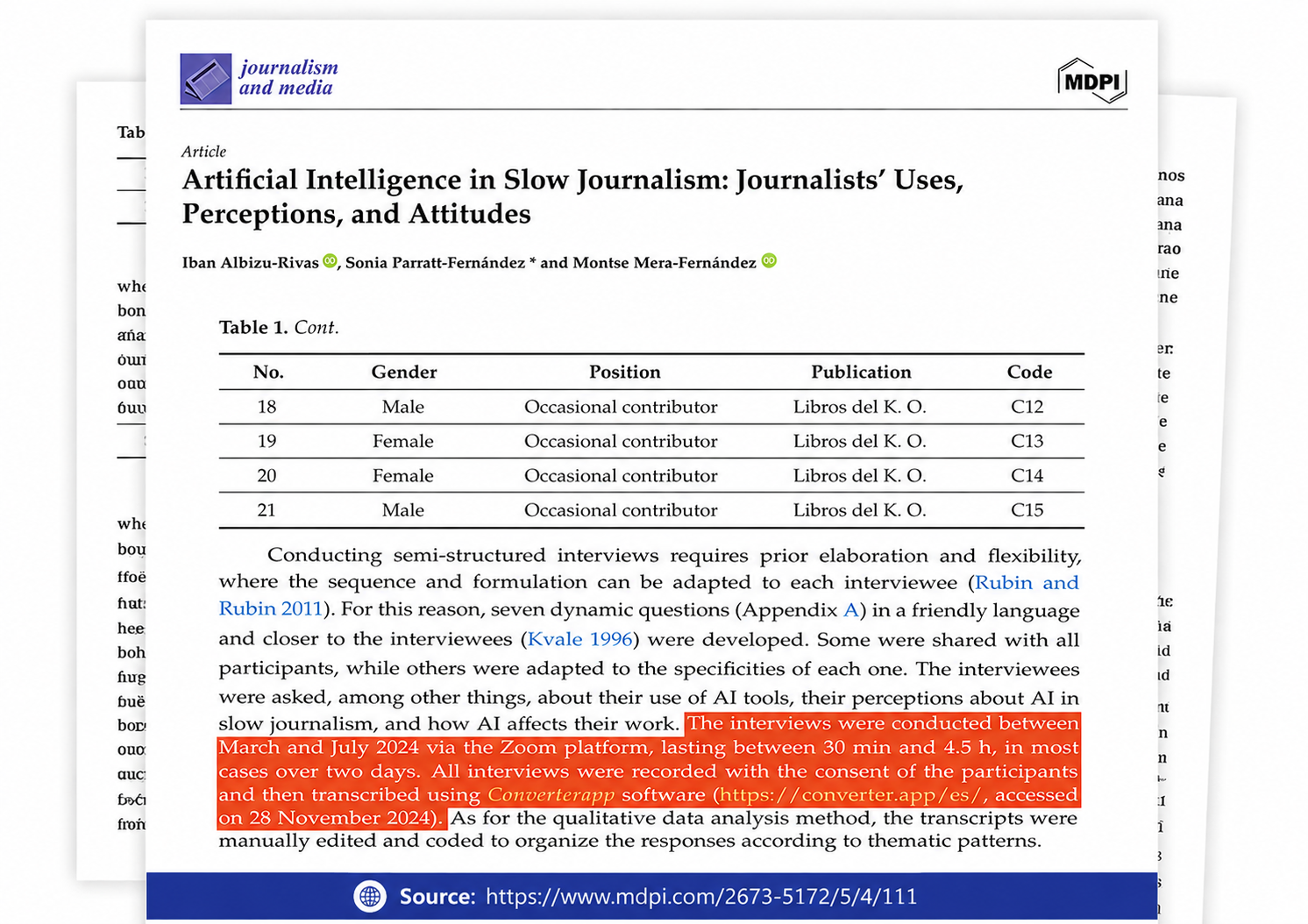
Referenced in published research and used for interview transcription and qualitative data analysis.
SubRip Text (SRT) was born from a DVD ripping tool around 2000 and is as simple as a subtitle format can be: a counter, a time range, text, blank line. Advanced SubStation Alpha grew out of the SubStation Alpha karaoke tool and became the standard of the anime fansubbing community because it can place translated signs over the original Japanese text, animate karaoke lyrics and match the show's typography. The complexity that makes ASS powerful is also why consumer devices avoid it. In practice most viewers only need the dialogue, and SRT delivers it everywhere.
FFmpeg parses the [Script Info], [V4+ Styles] and [Events] sections. For each Dialogue event it reads the start and end time, the style name and the text. Override tags in curly braces are interpreted: italic and bold become SRT tags, the style's font size becomes a tag, everything else is discarded. The \N and \n codes become line breaks, hard spaces become normal spaces. Comment events and vector drawings are skipped. The cues are numbered sequentially in time order and written as UTF-8 with the standard hours:minutes:seconds,milliseconds timestamps.
To extract subtitles from an MKV before converting, use our MKV to SRT tool. For web players, SRT to VTT produces the WebVTT format that HTML5 video requires. And if you have a video without subtitles at all, our audio and video to SRT transcription creates timed captions with the Whisper speech recognition model.
Everything that SRT cannot represent: fonts, colours, outline and shadow, screen positions, rotation, karaoke timing, fades and sign typesetting. The spoken dialogue, its timing and simple italics or bold survive. For anime with heavily typeset signs, expect the sign translations to appear as ordinary subtitle lines at the bottom of the screen, sometimes overlapping dialogue.
Many devices do not: smart TVs, streaming boxes, Plex and Jellyfin clients on some platforms, and all major video sites accept SRT but not ASS. Editing programs such as Premiere and DaVinci Resolve also import SRT only. SRT is the lowest common denominator, which is exactly what you want for compatibility.
Yes. ASS stores times to hundredths of a second and SRT to thousandths, so every timestamp is represented exactly. Overlapping lines, which ASS allows freely, are written as overlapping SRT cues; most players show both, a few show only the first.
No. Override blocks such as {\pos(320,40)} or {\an8} are stripped. Italic and bold overrides are converted to the and tags that SRT players understand, and the style's font size is written as a tag, which players ignore and a subtitle editor can remove in one find-and-replace if a strict validator objects. Drawing commands used for shapes are removed entirely.
Yes. SSA files use the same event structure with fewer style fields and convert the same way. Rename an .ssa file to .ass if the upload form does not accept it.
Our SRT to ASS converter wraps the cues in a default ASS style. The original styling cannot be recreated automatically; keep the ASS file if you may need it again.